Host Country
Africa’s most populous nation welcomes West Africa Project Fair delegates to Lagos with a story shaped by 237.5 million people, enterprise, culture, creativity and continental influence.
Nigeria will welcome Rotarians, project partners and development leaders to Lagos on 14 and 15 November 2026 as host country of the West Africa Project Fair, WAPF 2026, bringing the regional Rotary gathering to Africa’s most populous nation and one of its most influential centres of commerce, culture and enterprise.
For delegates arriving from across West Africa and beyond, Nigeria at WAPF 2026 offers something larger than the setting for a two-day gathering. It provides an encounter with a country whose scale, contradictions, ambition and creative energy have helped shape contemporary Africa.
With an estimated population of 237,527,782 in 2025, Nigeria is home to almost a quarter of a billion people. The country comprises 36 states and the Federal Capital Territory, bringing together a remarkable range of ethnic identities, languages, traditions and local histories within one federation.
That scale is central to understanding Nigeria.
It creates enormous opportunities, a vast domestic market and a deep pool of human talent. It also magnifies the country’s development challenges, from poverty and infrastructure deficits to inequality, insecurity and pressure on public services.
Nigeria’s economy strengthened in 2025, recording growth of 4.0 per cent, driven particularly by services including information and communications technology, finance and real estate, alongside improvements in agriculture and construction. GDP at current US dollar values stood at approximately US$290.8 billion.
The improving macroeconomic picture, however, exists alongside pressures experienced by ordinary households. Incomes have yet to recover fully from recent economic shocks, while poverty and the cost of living remain significant concerns.
It is an important distinction. Nigeria’s power is not a story without difficulties. Rather, much of the country’s reputation for resilience and enterprise has developed alongside the scale of the problems Nigerians continue to confront.
From Lagos, Kano and Aba to Abuja, Port Harcourt and other commercial centres, private enterprise occupies a visible place in everyday Nigerian life. Markets coexist with banks, technology companies, manufacturers, professional services firms and a rapidly evolving digital economy.
Nigeria’s influence is particularly striking in financial technology and digital entrepreneurship. The combination of a large domestic market, expanding digital adoption and an energetic entrepreneurial community has created fertile ground for technology businesses addressing payments, commerce, logistics and other everyday needs.
The opportunity is connected to something more fundamental than technology. Nigeria has a large population of young people, an extensive domestic market and an entrepreneurial culture in which people routinely create businesses around problems that have yet to be solved by established systems.
Nigeria’s cultural power has travelled even further.
Nollywood turned a largely home-grown film industry into one of Africa’s most prolific storytelling machines, producing around 2,500 films annually and reaching audiences well beyond Nigeria through television, cinemas and digital platforms.
The industry’s significance is not simply in the number of films produced. Nigerian stories, accents, fashion, humour and social experiences have become increasingly familiar to audiences across Africa and the diaspora.
The country’s music has followed an equally remarkable trajectory. Nigerian sounds that once travelled principally through local radio, parties, physical recordings and African diasporic communities now occupy international charts, festivals and arenas.
Afrobeats has given a new generation of Nigerian performers global visibility, but the country’s musical influence is older and broader than the contemporary movement. Highlife, juju, fuji and Afrobeat form part of a musical inheritance upon which newer artists continue to build.
Literature provides another window into Nigeria’s reach. Nigerian writers have carried the country’s histories, humour, tensions and social experiences to readers around the world, while contemporary visual artists, photographers and fashion designers increasingly participate in an international creative marketplace without surrendering the cultural references that make their work recognisably Nigerian.
Food tells its own story.
Jollof rice may inspire good-natured West African rivalry, but Nigeria’s culinary landscape extends far beyond one celebrated dish. From suya and pepper soup to pounded yam, egusi, ofada rice, moi moi and an enormous range of regional cuisines, food remains one of the most immediate ways visitors encounter the country’s diversity.
Then there is Lagos.
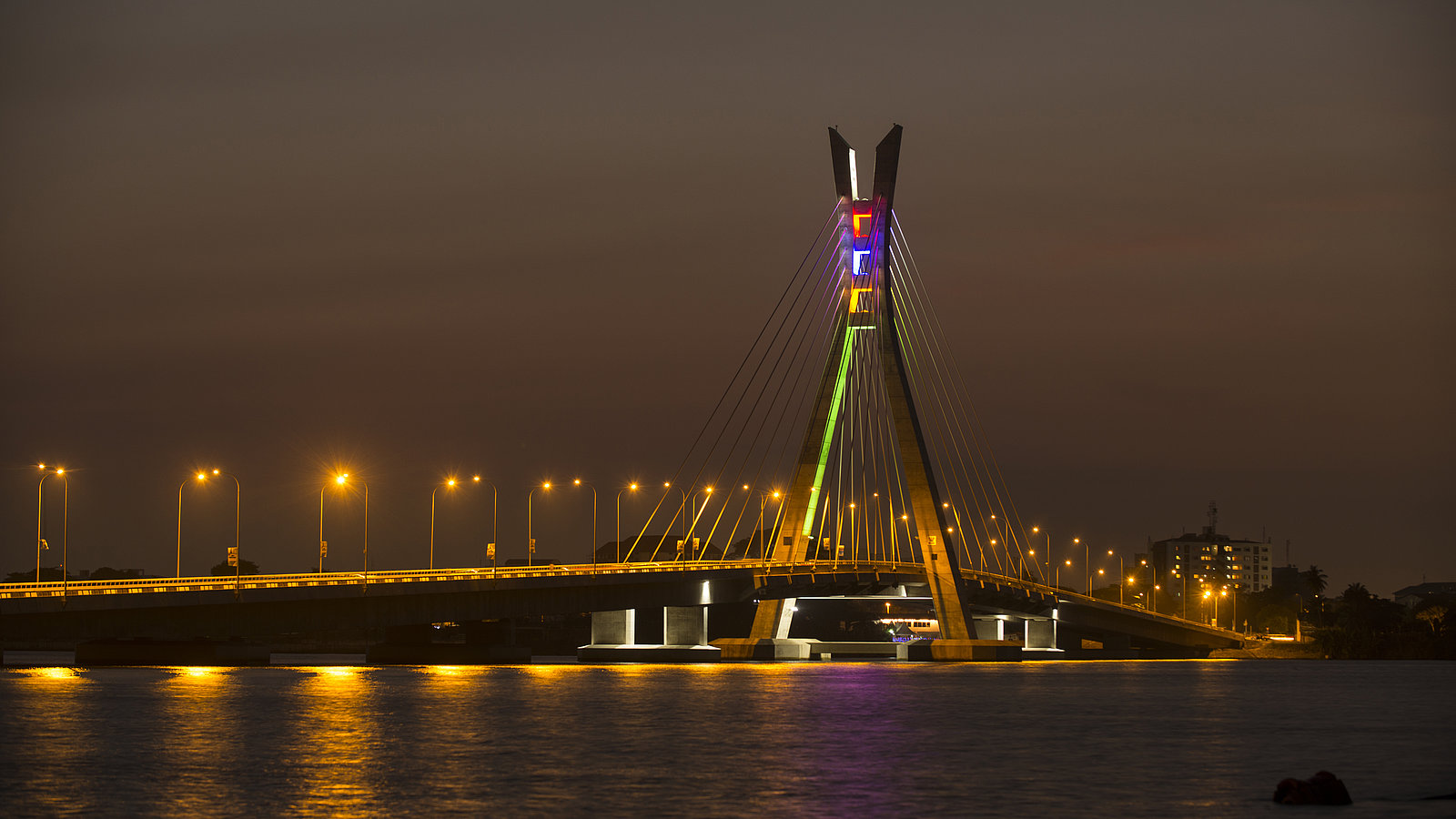
Nigeria’s commercial heartbeat is an appropriate host city for WAPF 2026 because Lagos concentrates many of the forces that define modern Nigeria in one place.
The city is restless and entrepreneurial. Finance, technology, entertainment, hospitality, fashion, trade and professional services operate alongside enormous informal commercial networks. Traffic can be demanding and the pace can be unforgiving, yet the same intensity gives Lagos its unmistakable character.
For a visitor, Lagos can move quickly from corporate towers and waterfront districts to sprawling markets, galleries, restaurants, beaches and neighbourhoods with distinct histories and personalities.
Its importance also extends beyond Nigeria. Lagos functions as a gateway through which ideas, capital, entertainment and people move between Nigeria, West Africa and the wider world.
Nigeria’s position in regional trade is equally significant. With its enormous population, large domestic market and geographic position in West Africa, the country has the potential to play a defining role in deeper economic integration across the continent.
That continental dimension makes Nigeria particularly relevant to the West Africa Project Fair.
WAPF is built around collaboration, partnerships and projects capable of improving communities. Nigeria presents both the scale of the need for such interventions and the human and institutional capacity required to deliver them.
Rotary’s work across health, education, peacebuilding, water and sanitation, economic development, maternal and child health, environmental action and other areas sits within a country where successful interventions can potentially touch large populations.
Hosting the fair in Lagos therefore carries significance beyond hospitality.
It places visiting Rotarians and partners inside one of Africa’s most consequential development environments, where extraordinary private initiative exists alongside substantial social needs and where effective partnerships can produce meaningful impact.
For Nigeria, there is also an opportunity to show visitors a country more nuanced than either celebratory slogans or difficult headlines suggest.
The Nigeria delegates will encounter is a nation still negotiating serious economic and social pressures. Poverty, food costs, infrastructure limitations and pressure on household incomes remain genuine challenges even as the broader economy shows signs of greater stability.
Yet Nigeria is also a country of creators, entrepreneurs, professionals, artisans, traders, academics, technologists and community leaders who continually find ways to build, adapt and contribute.
That human energy may ultimately be Nigeria’s most compelling form of power.
Natural resources matter. Population matters. Economic scale matters. Geography matters.
But countries are ultimately animated by people.
For WAPF delegates arriving in Lagos in November 2026, the invitation is therefore not simply to attend another Rotary programme.
It is an invitation to encounter Nigeria up close, to experience its hospitality, understand its complexities, engage its people and discover possibilities for partnerships that can continue long after the final session of the West Africa Project Fair.
Welcome to Lagos.
Welcome to WAPF 2026.